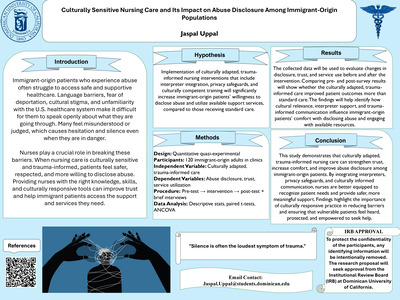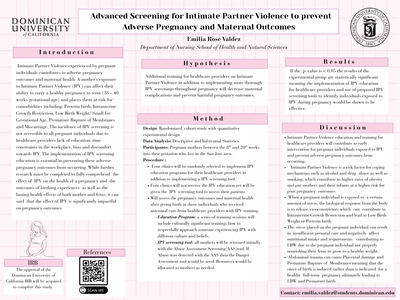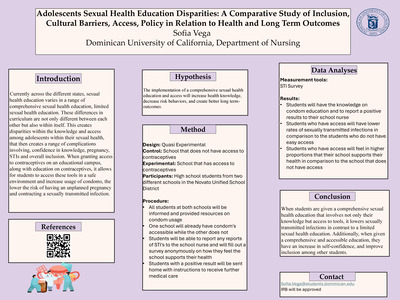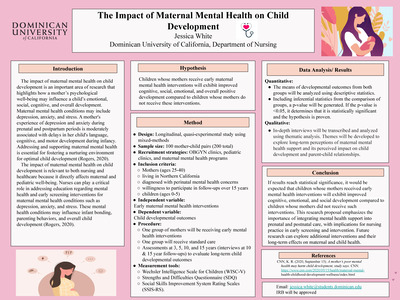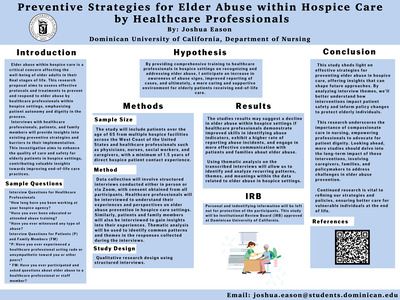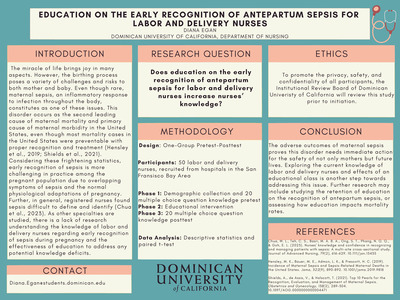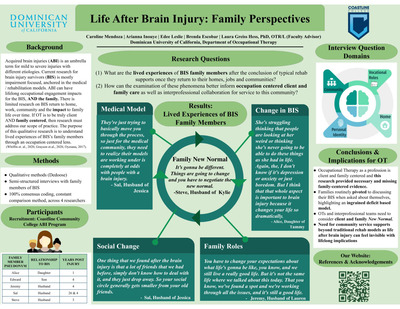
Research is a cornerstone of education at Dominican University of California. Posters in this collection showcase student research presented at conferences.
Browse our research posters by department
Barowsky School of Business | Education | Global Public Health | Natural Sciences and Mathematics | Nursing | Occupational Therapy | Physician Assistant Studies | Psychology
-
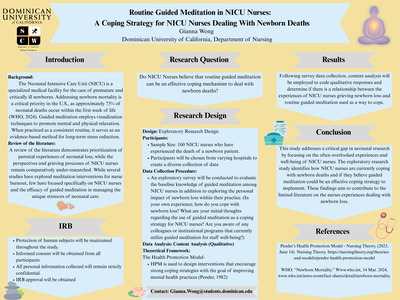
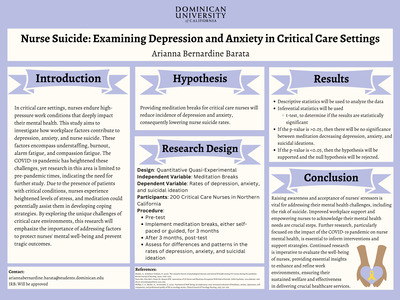
Routine Guided Meditation in NICU Nurses: A Coping Strategy for NICU Nurses Dealing With Newborn Deaths
Gianna Wong
Purpose: This research study aims to investigate the emotional impact of newborn deaths on Neonatal Intensive Care Unit (NICU) nurses in addition to evaluating their perceptions of routine guided meditation as an effective coping mechanism to manage professional grief and enhance psychological well-being. Methods: Utilizing an exploratory descriptive research design grounded in Pender’s Health Promotion Model (HPM), this study examines the lived experiences and health-promoting behaviors of neonatal nurses following newborn deaths. Data: Anticipatory collection of data will be from a sample of NICU nurses based in California through a twelve-question survey featuring open-ended questions. Qualitative content analysis will be employed to identify recurring themes and patterns in the nurses' experiences along with their perceptions on the effectiveness of routine guided meditation to manage emotional exhaustion in NICU nurses. Conclusion: The lack of research and institutional support for NICU nurses following newborn deaths emphasizes the significance in this research study. Exploring NICU nurses' experiences and perceptions regarding the use of routine guided meditation is a critical first step in bringing awareness to this issue and identifying effective coping strategies to support their psychological resilience and emotional capacity.
-
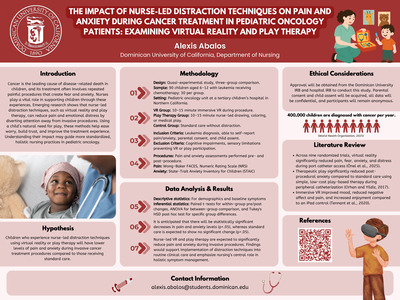
The Impact of Nurse-Led Distraction Techniques on Pain and Anxiety During Cancer Treatment in Pediatric Oncology Patients: Examining Virtual Reality and Play Therapy
Alexis Abalos
Children undergoing cancer treatment often experience pain and anxiety during procedures such as port access or peripheral catheterization. Nurse-led distraction techniques, including virtual reality and play therapy, have emerged as promising non-pharmacologic interventions to reduce pain and anxiety in pediatric oncology patients. Existing data from primary and secondary research articles reveal the effectiveness of virtual reality and play therapy on reducing pain, anxiety, and psychosocial distress in pediatric oncology patients receiving cancer treatment. This study proposes a quasi-experimental design involving 90 pediatric oncology patients aged 6–12 years diagnosed with leukemia. Participants will be placed in a nurse-led VR distraction, play therapy, or standard care group. Pain and anxiety will be measured before and after each invasive procedure. It is anticipated that both distraction groups will show statistically significant reductions in pain and anxiety compared to standard care. Findings may support implementing nurse-led distraction techniques in routine nursing care to promote a more holistic approach to symptom management.
-
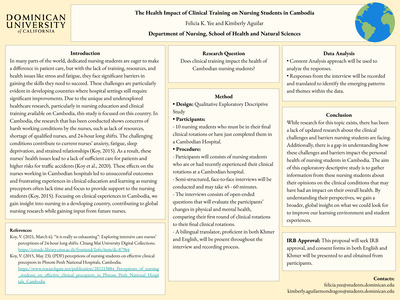
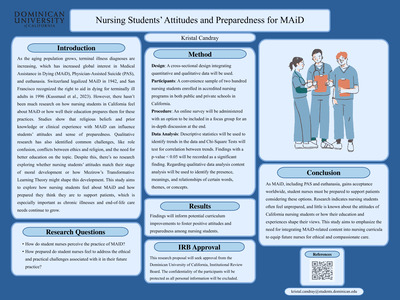
The Health Impact of Clinical Training on Nursing Students in Cambodia
Kimberly Aguilar Mondragon and Felicia Kim Yee
Background: Clinical training presents significant challenges for nursing students worldwide, particularly evident in developing countries like Cambodia, where these difficulties are intensified by a lack of training, resources, and health issues like stress and fatigue. Many students struggle without adequate guidance, forcing them to navigate complex clinical environments independently. These factors not only impact students’ confidence and academic performance, but also their health and well-being. Through this study, we can gain insight into nursing in a developing country that hasn’t been widely studied, contributing to global nursing research. Purpose: The purpose of this study is to explore the health impact of clinical training on nursing students in Cambodia. Method: A qualitative exploratory descriptive approach will be used. Research will be conducted among 10 nursing students who are either in their final clinical rotations or have just completed them in a Cambodian Hospital. They will participate in semi-structured interviews that will last 45 to 60 minutes. A bilingual translator, proficient in both Khmer and English, will conduct the interview, record, and transcribe the data collected from the interview with the researcher who has some knowledge of Khmer present. The interviews will focus on the challenges faced during clinical experiences and their effects on the students’ health. Data Collection & Analysis: Participant responses will be recorded and translated to identify all the emerging patterns and themes using content analysis. Conclusion: We anticipate that the students have faced challenges that not only hinder academic performance, but also have significant implications for students’ physical and mental health due to stresses of the clinical environment and lack of support by the nurses and nursing preceptors. By understanding these issues, educators and policymakers can implement interventions to better support nursing students, ultimately improving the quality of patient care.
-
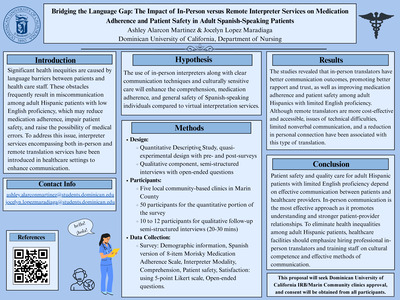
Bridging the Language Gap: The Impact of In-Person versus Remote Interpreter Services on Medication Adherence and Patient Safety in Adult Spanish-Speaking Patients
Ashley E. Alarcon Martinez and Jocelyn N. Lopez Maradiaga
Background: Significant health inequities are caused by language barriers between patients and health care staff, resulting in miscommunication among adult Hispanic patients with low English proficiency, reducing medication adherence, impairing patient safety, and raising the possibility of medical errors. To address this issue, interpreter services, both in-person and remote translation, have been introduced in healthcare settings to enhance communication. Objective: The purpose of this study is to investigate the differences in patient safety and medication adherence between in-person and remote translation services for adult Hispanic individuals with limited English proficiency in healthcare settings. Methods: The proposed research involves five local community-based clinics in Marin County that primarily serve Spanish-speaking adults. The clinic's patients will be asked to participate and complete a short survey in Spanish about their experiences and preferences regarding translation services. Results: The studies revealed that in-person translators have better communication outcomes, promoting better rapport and trust, as well as improving medication adherence and patient safety among adult Hispanics with limited English proficiency. Although remote translators are more cost-effective and accessible, issues of technical difficulties, limited nonverbal communication, and a reduction in personal connection have been associated with this type of translation. Conclusion: Patient safety and care for adult Hispanic patients with limited English proficiency depend on effective communication. In-person communication is the most effective as it promotes understanding and stronger patient-provider relationships. To eliminate health inequalities, healthcare facilities should prioritize hiring professional in-person translators and training staff on cultural competence and effective communication methods.
-
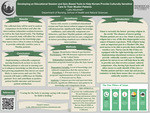
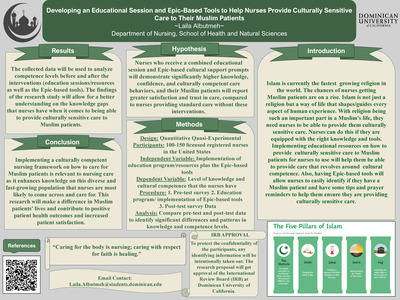
Developing an Educational Session and Epic-Based Tools to Help Nurses Provide Culturally Sensitive Care to Their Muslim Patients
Laila Albutmeh
Islam is currently the fastest growing religion in the world. The chances of nurses getting Muslim patients are on a rise. Islam is not just a religion but a way of life that shapes/guides every aspect of human experience. With religion being such an important part in a Muslim's life, they need nurses to be able to provide them culturally sensitive care. Nurses can do this if they are equipped with the right knowledge and tools. Implementing educational resources on how to provide culturally sensitive care to Muslim patients for nurses to use will help them be able to provide care that revolves around cultural competence. Also, having Epic-based tools will allow nurses to easily identify if they have a Muslim patient and have some tips and prayer reminders to help them ensure they are providing culturally sensitive care.
-
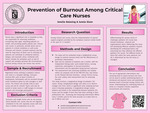
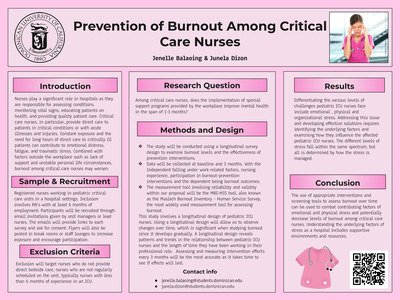
Prevention of Burnout Among Critical Care Nurses
Jenelle Balaoing and Junela Bautista
Background: Nursing burnout is a state of mental and physical exhaustion caused by excessive stress among nurses. Critical care nurses face challenges with direct patient care that contribute to emotional and psychological strain that are greatly influenced by workplace adversity and emotional management. Purpose: This research examines the prevalence of burnout among pediatric and adult intensive care unit (ICU) nurses, highlighting particularly high rates of burnout among those with extended years of service. Method: ICU nurses will participate in a qualitative interview that involves open ended questions relevant among burnout and resilience during shifts. Aspects specifically years of critical experience and gender will play a vital role with collecting the data. Managing exposure includes the methods of protecting, processing, decontaminating, and distancing in the work environment. Results/ Data Collection and Analysis: Differentiating the various levels of challenges pediatric ICU nurses face include emotional, physical and organizational stress. Addressing this issue and developing effective solutions requires identifying the underlying factors and examining how they influence the affected pediatric ICU nurses. The different levels of stress fall within the same spectrum, but all is determined by how the stress is managed. Conclusion: The use of appropriate interventions and screening tools to assess burnout over time can be used to combat contributing factors of emotional and physical stress and potentially decrease levels of burnout among critical care nurses. Understanding the underlying factors of stress as a hospital includes supportive environments and resources.
-
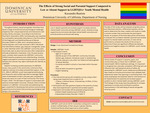
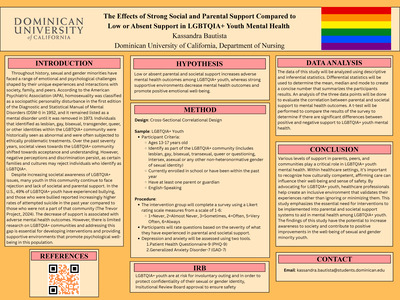
The Effects of Strong Social and Parental Support Compared to Low or Absent Support in LGBTQIA+ Youth Mental Health
Kassandra Bautista
Throughout history, sexual and gender minorities have faced a range of emotional and psychological challenges shaped by their unique experiences and interactions with society, family, and peers. According to the American Psychiatric Association (APA), homosexuality was classified as a sociopathic personality disturbance in the first edition of the Diagnostic and Statistical Manual of Mental Disorders (DSM-I) in 1952, and it remained listed as a mental disorder until it was removed in 1973. Individuals that identified as lesbian, gay, bisexual, transgender, queer, or other identities within the LGBTQIA+ community were historically seen as abnormal and were often subjected to ethically problematic treatments. Over the past seventy years, societal views towards the LGBTQIA+ community shifted towards acceptance and understanding. However, negative perceptions and discrimination persist, as certain families and cultures may reject individuals who identify as LGBTQIA+.
Despite increasing societal awareness of LGBTQIA+ issues, many youth in this community continue to face rejection and lack of societal and parental support. In the U.S., 49% of LGBTQIA+ youth have experienced bullying, and those who were bullied reported increasingly higher rates of attempted suicide in the past year compared to those who were not a part of that community (The Trevor Project, 2024). The decrease of support is associated with adverse mental health outcomes. However, there is limited research on LGBTQIA+ communities and addressing this gap is essential for developing interventions and providing supportive environments that promote psychological well-being in this population.
-
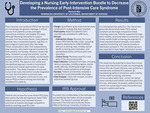
Developing a Nursing Early-Intervention Bundle to Decrease the Prevalence of Post-Intensive Care Syndrome
Aneesha Biju
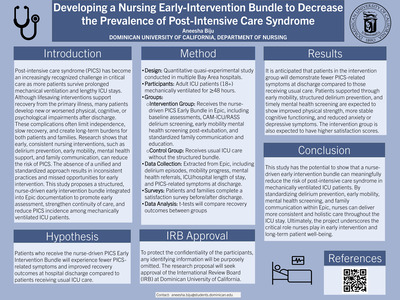
Post-intensive care syndrome (PICS) has become an increasingly recognized challenge in critical care as more patients survive prolonged mechanical ventilation and lengthy ICU stays. Although lifesaving interventions support recovery from the primary illness, many patients develop new or worsened physical, cognitive, or psychological impairments after discharge. These complications often limit independence, slow recovery, and create long-term burdens for both patients and families. Research shows that early, consistent nursing interventions, such as delirium prevention, early mobility, mental health support, and family communication, can reduce the risk of PICS. The absence of a unified and standardized approach results in inconsistent practices and missed opportunities for early intervention. This study proposes a structured, nurse-driven early intervention bundle integrated into Epic documentation to promote early assessment, strengthen continuity of care, and reduce PICS incidence among mechanically ventilated ICU patients.
-
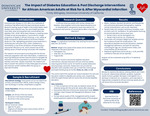
The Impact of Diabetes Education & Post Discharge Interventions for African American Adults at Risk for & After Myocardial Infarction
Trinity L. Billingsley
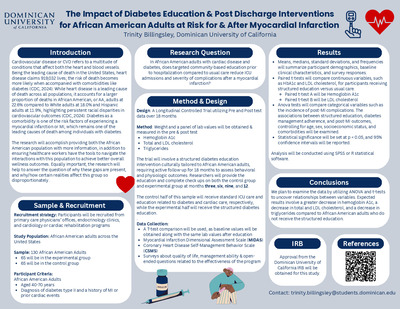
Cardiovascular disease or CVD refers to a multitude of conditions that affect both the heart and blood vessels. Being the leading cause of death in the United States, heart disease claims 919,032 lives; the risk of death becomes more likely when accompanied with comorbidities like diabetes (CDC, 2024). While heart disease is a leading cause of death across all populations, it accounts for a larger proportion of deaths in African American, or AA, adults at 22.6% compared to White adults at 18.0% and Hispanic adults at 11.9%, highlighting persistent racial disparities in cardiovascular outcomes (CDC, 2024). Diabetes as a comorbidity is one of the risk factors of experiencing a myocardial infarction or MI, which remains one of the leading causes of death among individuals with diabetes.
The research will accomplish providing both the African American population with more information, in addition to ensuring healthcare workers have the tools to navigate the interactions with this population to achieve better overall wellness outcomes. Equally important, the research will help to answer the question of why these gaps are present, and how certain realities affect this group so disproportionately.
-
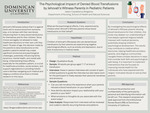
The Psychological Impact of Denied Blood Transfusions by Jehovah's Witness Parents in Pediatric Patients
Jaelyn Capablanca Braganza
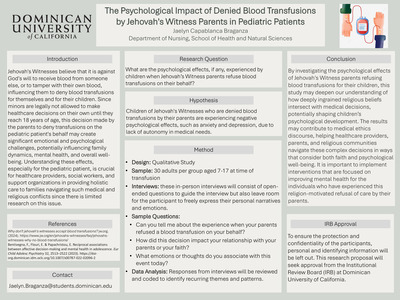
Jehovah's Witnesses believe that it is against God's will to receive blood from someone else, or to tamper with their own blood, influencing them to deny blood transfusions for themselves and for their children. Since minors are legally not allowed to make healthcare decisions on their own until they reach 18 years of age, this decision made by the parents to deny transfusions on the pediatric patient's behalf may create significant emotional and psychological challenges, potentially influencing family dynamics, mental health, and overall well-being. Understanding these effects, especially for the pediatric patient, is crucial for healthcare providers, social workers, and support organizations in providing holistic care to families navigating such medical and religious conflicts since there is limited research on this issue.
-
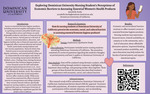
Exploring Dominican University Nursing Student’s Perceptions of Economic Barriers to Accessing Essential Women’s Health Products
Annabelle E. Burke
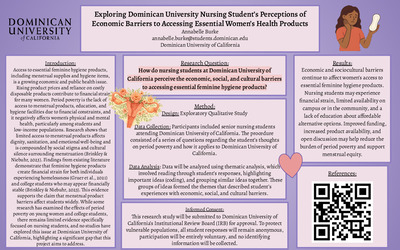
Access to essential feminine hygiene products, including menstrual supplies and hygiene items, is a growing economic and public health issue. Rising product prices and reliance on costly disposable products contribute to financial strain for many women. Period poverty is the lack of access to menstrual products, education, and hygiene facilities due to financial constraints, and it negatively affects women’s physical and mental health, particularly among students and low-income populations. Research shows that limited access to menstrual products affects dignity, sanitation, and emotional well-being and is compounded by social stigma and cultural silence surrounding menstruation (Brinkley & Niebuhr, 2023). Findings from existing literature demonstrate that feminine hygiene products create financial strain for both individuals' experiencing homelessness (Gruer et al., 2021) and college students who may appear financially stable (Brinkley & Niebuhr, 2023). This evidence supports the claim that menstrual product barriers affect students widely. While some research has examined the effects of period poverty on young women and college students, there remains limited evidence specifically focused on nursing students, and no studies have explored this issue at Dominican University of California, highlighting a significant gap that this project aims to address.
-
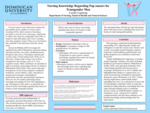
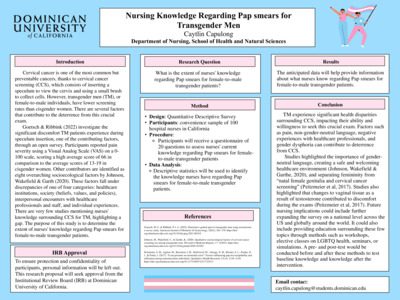
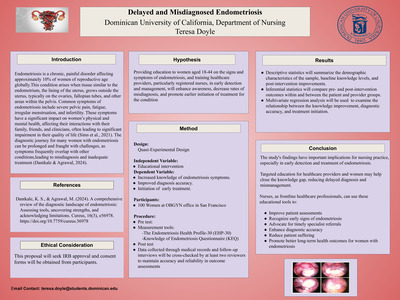
Nursing Knowledge Regarding Pap smears for Transgender Men
Caytlin Capulong
Cervical cancer screening (CCS) is a crucial test used for preventative measures against cervical cancer, yet transgender men (TM) experience significantly lower screening rates in comparison to cisgender women due to pain, anxiety, and systemic healthcare barriers. A major factor for deterrence is pain during speculum insertion, often because of vaginal atrophy related to testosterone usage. Other factors include fear of discrimination, mistreatment, and lack of provider awareness, particularly among nurses who play a pivotal role in patient preparation and care. This research aims to assess the extent of nurses’ knowledge regarding Pap smears for female-to-male (FTM) patients through a quantitative descriptive survey. A Likert scale-based questionnaire will evaluate the knowledge of 100 nurses in California, identifying potential areas of knowledge deficits in understanding CCS for TM. The anticipated findings will highlight any potential gaps in knowledge, which could inform future educational interventions such as workshops or simulations.
-
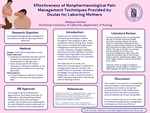
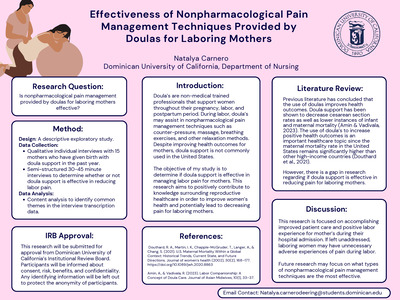
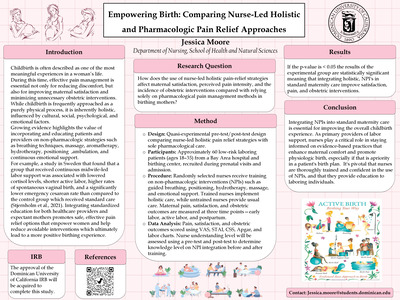
Effectiveness of Nonpharmacological Pain Management Techniques Provided by Doulas for Laboring Mothers
Natalya L. Carnero Deering
-
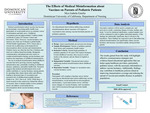
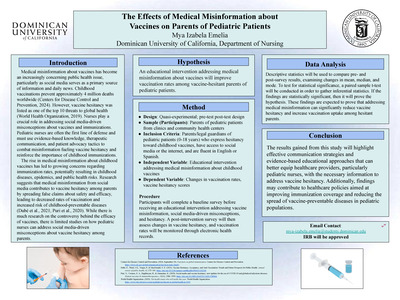
The Effects of Medical Misinformation about Vaccines on Parents of Pediatric Patients
Mya Izabela B. Emelia
-
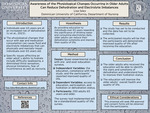
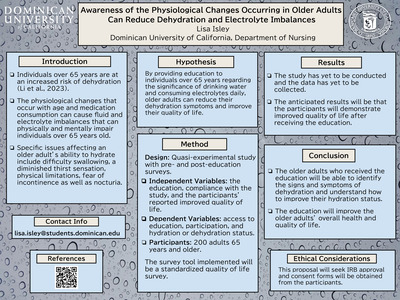
Awareness of the Physiological Changes Occurring in Older Adults Can Reduce Dehydration and Electrolyte Imbalances
Lisa Isley
Background: Individuals over 65 years are at an increased risk of dehydration. The physiological changes that occur with age and medication consumption can cause fluid and electrolyte imbalances that can physically and mentally impair individuals over 65 years old. Objective: By providing education to individuals 65 years and older regarding the significance of drinking water and consuming electrolytes daily, older adults can reduce their dehydration symptoms and improve their quality of life. Method: The proposed research is a quasi-experimental study geared towards individuals 65 years and older. The quasi-experimental study will include two pre-surveys and then two post-surveys. The survey tool implemented will be a standardized quality of life survey. The survey tool will measure the reported changes in the participants’ quality of life before and after the participants receive education. Results: The study has yet to be conducted and the data has yet to be collected. The anticipated results will be that the participants will demonstrate improved quality of life after receiving the education. Conclusion: The older adults who received the education will be able to identify the signs and symptoms of dehydration and understand how to improve their hydration status. The educational modules will help increase the participants' awareness and reduce the symptoms of dehydration. The education will improve the older adults’ overall health and quality of life.
-
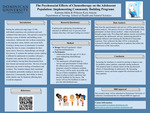
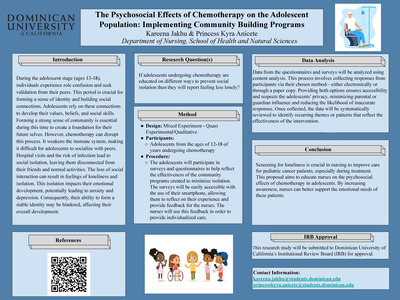
The Psychosocial Effects of Chemotherapy on the Adolescent Population: Implementing Community Building Programs
Kareena Jakhu and Princess Kyra R. Anicete
Background: During the adolescent stage (13-18), individuals go through role confusion and seek much of their validation from their fellow peers. Forming a strong sense of community is crucial in this stage of development as it helps with creating a foundation for who they want to become. Chemotherapy strips this aspect of socialization due to its ability to suppress the immune system. When socialization is taken away, adolescents face loneliness, which greatly impacts their development. Purpose: The purpose of this research is to look into the adolescent population undergoing chemotherapy and help them aid the lack of socialization caused by chemotherapy. Methods: The adolescents will participate in surveys and questionnaires to help reflect the effectiveness of the community programs created to minimize isolation. The surveys will be easily accessible with the use of their smartphone, allowing them to reflect on their experience and provide feedback to the nurses. Data Collection and Analysis: This research has not been initiated yet, however the anticipated results are improved mental health outcomes within the adolescents, allowing for enhanced socialization with their peers during their treatment journey. Conclusion: Screening for feelings of loneliness is relevant to nursing to help improve individualized care with pediatric cancer patients, especially during this crucial time. This proposal will help with educating nurses on the psychosocial effects of chemotherapy in the adolescent population.