

Files
Download Full Text (929 KB)
Description
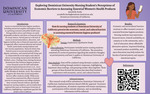
Access to essential feminine hygiene products, including menstrual supplies and hygiene items, is a growing economic and public health issue. Rising product prices and reliance on costly disposable products contribute to financial strain for many women. Period poverty is the lack of access to menstrual products, education, and hygiene facilities due to financial constraints, and it negatively affects women’s physical and mental health, particularly among students and low-income populations. Research shows that limited access to menstrual products affects dignity, sanitation, and emotional well-being and is compounded by social stigma and cultural silence surrounding menstruation (Brinkley & Niebuhr, 2023). Findings from existing literature demonstrate that feminine hygiene products create financial strain for both individuals' experiencing homelessness (Gruer et al., 2021) and college students who may appear financially stable (Brinkley & Niebuhr, 2023). This evidence supports the claim that menstrual product barriers affect students widely. While some research has examined the effects of period poverty on young women and college students, there remains limited evidence specifically focused on nursing students, and no studies have explored this issue at Dominican University of California, highlighting a significant gap that this project aims to address.
Department
Nursing
Faculty Mentor(s)
Andrea Boyle PhD, FNAP, ANP
Publication Date
2025
Sponsorship/Conference/Institution
Dominican University of California
City
San Rafael
Keywords
Period poverty, feminine hygiene products, qualitative study, economic and public health issue.
Disciplines
Community Health and Preventive Medicine | Health Economics | Medical Education | Nursing | Women's Health
Included in
Community Health and Preventive Medicine Commons, Health Economics Commons, Medical Education Commons, Nursing Commons, Women's Health Commons