

Files
Download Full Text (799 KB)
Description
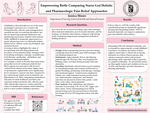
Childbirth is often described as one of the most meaningful experiences in a woman’s life. During this time, effective pain management is essential not only for reducing discomfort, but also for improving maternal satisfaction and minimizing unnecessary obstetric interventions. While childbirth is frequently approached as a purely physical process, it is inherently holistic, influenced by cultural, social, psychological, and emotional factors.
Growing evidence highlights the value of incorporating and educating patients and providers on non-pharmacologic strategies such as breathing techniques, massage, aromatherapy, hydrotherapy, positioning ,ambulation, and continuous emotional support.
For example, a study in Sweden that found that a group that received continuous midwife-led labor support was associated with lowered cortisol levels, shorter active labor, higher rates of spontaneous vaginal birth, and a significantly lower emergency cesarean rate than compared to the control group which received standard care(Stjernholm et al., 2021). Integrating standardized education for both healthcare providers and expectant mothers promotes safe, effective pain relief options that empower women and help reduce avoidable interventions which ultimately lead to a more positive birthing experience.
Department
Nursing
Faculty Mentor(s)
Kendra Hoepper, DNP, APRN, PNP-C
Publication Date
2025
Sponsorship/Conference/Institution
Dominican University of California
City
San Rafael, CA
Keywords
non-pharmacological interventions, maternal satisfaction, maternal pain, maternity care, nurse-led support, obstetric interventions
Disciplines
Alternative and Complementary Medicine | Maternal, Child Health and Neonatal Nursing | Nursing | Obstetrics and Gynecology | Women's Health
Included in
Alternative and Complementary Medicine Commons, Maternal, Child Health and Neonatal Nursing Commons, Obstetrics and Gynecology Commons, Women's Health Commons