-
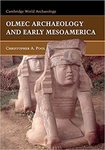
Olmec Archaeology and Early Mesoamerica
Christophe A. Pool
Between 1500 and 500 BC the Olmecs flourished in the tropical lowlands of Mexico's Gulf Coast, creating the most complex of Mesoamerica's early societies and its first monumental art. Emphasising the strategies of political leaders and the environmental and social diversity within the Olmec region, this up-to-date and comprehensive study describes the history of Olmec research, synthesises recent scholarship on the ecology, economy, socio-political organisation and ideology of Olmec society, and evaluates current debates over the influence of the Olmecs on their contemporaries and their contributions to later Mesoamerican civilisations.
- Publisher's description -
-
The View from the Center of the Universe: Discovering Our Extraordinary Place in the Cosmos
Joel P. Primack and Nancy Ellen Abrams
In this strikingly original book, a world-renowned cosmologist and an innovative writer of the history and philosophy of science uncover an astonishing truth: Humans actually are central to the universe. What does this mean for our culture and our personal lives? The answer is revolutionary: a science-based cosmology that allows us to understand the universe as a whole and our extraordinary place in it.
- Publisher's description -
-
What is Life?: How Chemistry Becomes Biology
Addy Pross
Seventy years ago, Erwin Schrodinger posed a profound question: 'What is life, and how did it emerge from non-life?' This problem has puzzled biologists and physical scientists ever since.
Living things are hugely complex and have unique properties, such as self-maintenance and apparently purposeful behaviour which we do not see in inert matter. So how does chemistry give rise to biology? What could have led the first replicating molecules up such a path? Now, developments in the emerging field of 'systems chemistry' are unlocking the problem. Addy Pross shows how the different kind of stability that operates among replicating molecules results in a tendency for chemical systems to become more complex and acquire the properties of life. Strikingly, he demonstrates that Darwinian evolution is the biological expression of a deeper, well-defined chemical concept: the whole story from replicating molecules to complex life is one continuous process governed by an underlying physical principle. The gulf between biology and the physical sciences is finally becoming bridged.- Publisher's description -
-
Ishmael
Daniel Quinn
Ishmael is an utterly unique and captivating spiritual adventure which redefines what it is to be human. We are introduced to Ishmael, a creature of immense wisdom. He has a story to tell, one that no human being has ever heard before. It is the story of man's place in the grand scheme, and it begins at the birth of time. This history of the world has never appeared in any schoolbook. "Does the earth belong to man?" Ishmael asks. "Or does man belong to the earth?"
- Publisher's description -
-
The Human Species: An Introduction to Biological Anthropology
John H. Relethford
The Human Species provides a comprehensive approach to biological anthropology, especially the relationship between biology and culture, behavior in an evolutionary context, and humans as a species within the primate order. With its lively narrative and emphasis on the most current topics and findings in the field, The Human Species explores the major questions that concern biological anthropologists about our species.
- Publisher's description -
-
Dogs of God: Columbus, The Inquisition, and the Defeat fo the Moors
James Reston Jr.
From the acclaimed author of Warriors of God comes a riveting account of the pivotal events of 1492, when towering political ambitions, horrific religious excesses, and a drive toward international conquest changed the world forever.James Reston, Jr., brings to life the epic story of Spain’s effort to consolidate its own burgeoning power by throwing off the yoke of the Vatican. By waging war on the remaining Moors in Granada and unleashing the Inquisitor Torquemada on Spain’s Jewish and converso population, King Ferdinand and Queen Isabella attained enough power and wealth to fund Columbus’ expedition to America and to chart a Spanish destiny separate from that of Italy. With rich characterizations of the central players, this engrossing narrative captures all the political and religious ferment of this crucial moment on the eve of the discovery of the New World.
- Publisher's description -
-
Farming in the Iron Age
Peter J. Reynolds
An account of farming, building, and daily life in the Iron Age in Britain based on experimental archaeological reconstructions.
- Publisher's description -
-
In The Beginning: world History from Human Evolution to the First States
Lauren Ristvet
This engaging and accessible volume draws on the most recent historical archeological scholarship to tell the stories of human evolution, "gathering and hunting" societies, and the distinct breakthroughs that led to the emergence of the earliest cities, states, and civilizations. Highlighting both the separate paths and the intersecting journeys of diverse human communities, In the Beginning provides the essential but often neglected foundation on which all subsequent historical development was constructed.
- Publisher's description -
-
Dances with the Earth: Geophonic Music from the Stratigraphic Record of Central Italy
Gabriele Rossetti and Alessandro Montanari
-
Ancient Iraq
Georges Roux
Newly revised and containing information from recent excavations and discovered artifacts, Ancient Iraq covers the political, cultural, and socio-economic history from Mesopotamia days of prehistory to the Christian era.
- Publisher's description -
-
Seven Brief Lessons on Physics
Carlo Rovelli
'Here, on the edge of what we know, in contact with the ocean of the unknown, shines the mystery and the beauty of the world. And it's breathtaking.' These seven short, simple lessons guide us through the scientific revolution that shook physics in the twentieth century and still continues to shake us today. Theoretical physicist Carlo Rovelli, a founder of the loop quantum gravity theory, explains Einstein's theory of general relativity, quantum mechanics, black holes, the complex architecture of the universe, elementary particles, gravity, and the nature of the mind. In under eighty pages, readers will understand the most transformative scientific discoveries of the twentieth century and what they mean for us
- Publisher's description -
-
Plows, Plagues, and Petroleum: How Humans Took Control of Climate
William F. Ruddiman
The impact on climate from 200 years of industrial development is an everyday fact of life, but did humankind's active involvement in climate change really begin with the industrial revolution, as commonly believed? Plows, Plagues, and Petroleum has sparked lively scientific debate since it was first published--arguing that humans have actually been changing the climate for some 8,000 years--as a result of the earlier discovery of agriculture.
- Publisher's description -
-
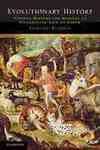
Evolutionary History: Uniting History ad Biology to Understand Life on Earth
Edmund Russell
We tend to see history and evolution springing from separate roots, one grounded in the human world and the other in the natural world. Human beings have, however, become probably the most powerful species shaping evolution today, and human-caused evolution in other species has probably been the most important force shaping human history. This book introduces readers to evolutionary history, a new field that unites history and biology to create a fuller understanding of the past than either can produce on its own. Evolutionary history can stimulate surprising new hypotheses for any field of history and evolutionary biology. How many art historians would have guessed that sculpture encouraged the evolution of tuskless elephants? How many biologists would have predicted that human poverty would accelerate animal evolution? How many military historians would have suspected that plant evolution would convert a counter-insurgency strategy into a rebel subsidy? With examples from around the globe, this book will help readers see the broadest patterns of history and the details of their own life in a new light.
- Publisher's description -
-
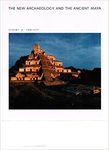
The New Archaelology and the Ancient Maya
Jeremy A. Sabloff
Using high-tech equipment, chemical analyses and sampling strategies, archaeologists are learning more about how and why cultures change. Using the study of the Maya as a test case, this book shows how the transformation of archaeology has brought new understanding of past civilizations.
- Publisher's description -
-
Cosmos
Carl Sagan
Cosmos is one of the bestselling science books of all time. In clear-eyed prose, Sagan reveals a jewel-like blue world inhabited by a life form that is just beginning to discover its own identity and to venture into the vast ocean of space.
- Publisher's description -
-
The Dragons of Eden
Carl Sagan
A presentation of the physical development of human intelligence. Includes color fold-out prehistoric illustration on inside front cover.
- Publisher's description -
-
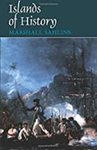
Islands of History
Marshall Sahlins
Marshall Sahlins centers these essays on islands—Hawaii, Fiji, New Zealand—whose histories have intersected with European history. But he is also concerned with the insular thinking in Western scholarship that creates false dichotomies between past and present, between structure and event, between the individual and society. Sahlins's provocative reflections form a powerful critique of Western history and anthropology.
- Publisher's description -
-
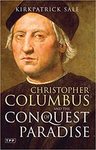
The Conquest of Paradise: Christopher Columbus and the Columbian Legacy
Kirkpatrick Sale
Christopher Columbus' arrival on a small Bahamian island in 1492 is often judged to be a defining moment in the history of mankind, changing forever the map of the world. Kirkpatrick Sale offers readers a unique take on Columbus and his legacy, separating the man from the legend. Sale also looks at the global consequences of the discovery, revealing the colossal impact this brief moment in history had not only on a continent but also on the world. Now with a new introduction by Sale, this classic book is being re-issued for the 500th aniversary of Columbus' death in the heart of Castille.
- Publisher's description -
-
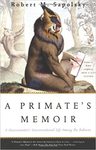
A Primate's Memoir: A Neuroscentist's Unconventional Life Among the Baboons
Robert M. Sapolsky
In the tradition of Jane Goodall and Dian Fossey, Robert Sapolsky, a foremost science writer and recipient of a MacArthur Genius Grant, tells the mesmerizing story of his twenty-one years in remote Kenya with a troop of Savannah baboons.
- Publisher's description -
-
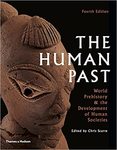
The Human Past
Chris Scarre
The Human Past has established itself as a thorough and authoritative survey of human prehistory and the development of civilizations. Written by an international team of respected experts in the field, it presents a streamlined overview that can be broken down into a series of chapters focusing on individual regions and time periods.
- Publisher's description -
-
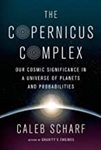
The Copernicus Complex: Our Cosmic Signficance in a Universe of Planets and Probabliities
Caleb Scharf
In The Copernicus Complex, the renowned astrophysicist Caleb Scharf takes us on a scientific adventure, from tiny microbes within the Earth to distant exoplanets, probability theory, and beyond, arguing that there is a solution to this contradiction, a third way of viewing our place in the cosmos, if we weigh the evidence properly. As Scharf explains, we do occupy an unusual time in a 14-billion-year-old universe, in a somewhat unusual type of solar system surrounded by an ocean of unimaginable planetary diversity: hot Jupiters with orbits of less than a day, planet-size rocks spinning around dead stars, and a wealth of alien super-Earths. Yet life here is built from the most common chemistry in the universe, and we are a snapshot taken from billions of years of biological evolution. Bringing us to the cutting edge of scientific discovery, Scharf shows how the answers to fundamental questions of existence will come from embracing the peculiarity of our circumstance without denying the Copernican vision.
- Publisher's description -
-
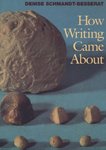
How Writing Came About
Denise Schmandt-Besserat
In 1992, the University of Texas Press published Before Writing, Volume I: From Counting to Cuneiform and Before Writing, Volume II: A Catalog of Near Eastern Tokens. In these two volumes, Denise Schmandt-Besserat set forth her groundbreaking theory that the cuneiform script invented in the Near East in the late fourth millennium B.C.—the world's oldest known system of writing—derived from an archaic counting device.How Writing Came About draws material from both volumes to present Schmandt-Besserat's theory for a wide public and classroom audience. Based on the analysis and interpretation of a selection of 8,000 tokens or counters from 116 sites in Iran, Iraq, the Levant, and Turkey, it documents the immediate precursor of the cuneiform script.
- Publisher's description -
-
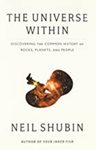
The Universe Within: Discovering the Common History of Rocks, Planets, and People
Neil Shubin
In The Universe Within, Neil Shubin reveals the connection between the evolution of the cosmos and the evolution of the human body.
Just as the history of the earth is written in the rocks, so too is the universe’s 14-billion-year history written in the human body. Starting at the smallest level, with our very molecular composition, Shubin explores the question of why we are the way we are, tracing the formation of the planets, the moon, and the globe of Earth through the development of the organs, cells, and genes that make up human life.- Publisher's description -
Printing is not supported at the primary Gallery Thumbnail page. Please first navigate to a specific Image before printing.